On a Sunday evening, a homeowner in Mississauga decides the rotting boards on her deck can't wait another season. She fills out quote requests on three contractors' websites, then goes to bed. Monday at 7:15 a.m., one of them texts her: 'Got your request about the deck. Can we come by Wednesday afternoon for a look?' She says yes. The other two reply Tuesday, and she politely tells them she's already booked an estimate.
That's speed to lead in one story. The contractor who replied first wasn't necessarily the best or the cheapest. They were simply first, and in the trades, first often wins.
Why speed matters so much in the trades
Homeowners shopping for a contractor usually reach out to several at once. Whoever responds first gets the first conversation, sets expectations for price and timing, and often books the estimate before anyone else is in the running.
Speed also says something about you. A homeowner can't easily judge workmanship before hiring, so they judge what they can see. A fast, clear reply suggests you'll show up when you say you will. A reply three days later suggests the opposite, fair or not.
And many trade jobs are urgent. When the furnace quits in January or the basement is taking on water, people aren't comparing portfolios. They want the first competent person who answers.
What the research says
This isn't just a hunch. A widely cited 2011 Harvard Business Review study of more than 2,000 companies found that firms that tried to contact online leads within an hour were nearly seven times as likely to qualify them as firms that waited even an hour longer, and far more likely than firms that waited a day. The study looked at web leads across industries rather than trades specifically, but the pattern matches what contractors see every day: interest fades fast.
Where your response time is leaking
Most slow responses aren't laziness. They come from how a contracting business actually runs:
- You're on a job. You can't stop mid-install to answer a form.
- Leads arrive after hours. Evenings and weekends are when homeowners finally have time to look for help.
- Forms go to an inbox nobody checks. A website form that emails an old address can sit unread for days.
- Phone tag. You call back, they're at work. They call back, you're on a roof.
- One attempt and done. If the first callback doesn't connect, the lead is quietly forgotten.

Test your own speed to lead
Before changing anything, find out where you stand. Fill out your own website form on a weeknight. Call your business line from a different phone on Saturday afternoon. Send a message through your Facebook page. Then time how long it takes to get a reply, and look at what that reply says.
Most owners are surprised. A form that seemed fine turns out to go nowhere, or the reply is a generic email that doesn't answer the question. Whatever you find is your starting point.
Build a system, not a heroic effort
You can't fix speed to lead by promising yourself you'll answer faster. You fix it by letting a system handle the first response and making sure a person always follows through.
1. Acknowledge every lead instantly
Every form submission, chat and missed call should get an automatic reply within seconds by text, and by email where it makes sense. It should name your business, confirm what they asked about, and say when a person will be in touch. Use the same idea for calls with missed call text back.
2. Answer questions and book while they're interested
Many leads have the same few questions: Do you serve my area? Do you do this kind of job? When can you come? AI website chat can answer these from information you approve and offer open times on your calendar, so the homeowner can book an estimate without waiting for you.
3. Set a human response window
Automation holds the lead, but a person should follow up within a set time, such as 15 minutes during business hours and first thing next morning for after-hours leads. Pick a window your team can actually meet.
4. Follow up with people who go quiet
Plenty of homeowners mean to reply and get busy. A short, friendly follow-up sequence over the next week catches them. Something like a text the next day, another a few days later, and a final check-in after a week is usually enough. We cover this in more detail in automated follow-up.
Make speed part of your pitch
Once you can reliably respond quickly, say so. A line on your website like 'We reply to every request within 15 minutes during business hours' is a real selling point, as long as it's true. Customers notice when you keep a promise like that, and they mention it in reviews.
A Vaughan HVAC example
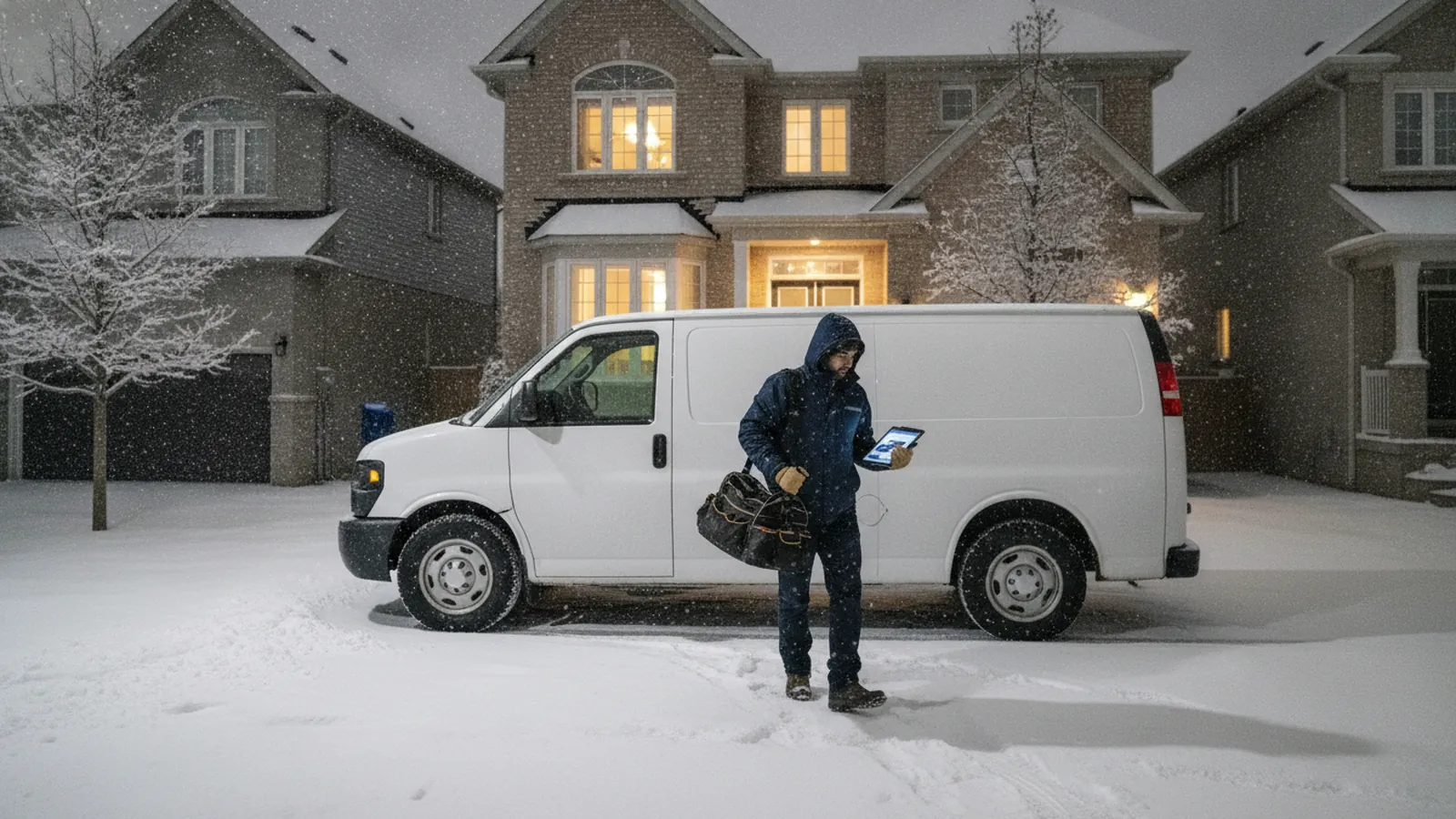
Imagine an HVAC company in Vaughan on the first really cold night of the year. Between 9 p.m. and midnight, a dozen homeowners with dead furnaces reach out through the website, by phone and through Facebook.
Without a system, those leads sit until morning, and by then most have found someone with an emergency line. With a system, every one of them gets a reply within seconds. The automatic message collects the address and the furnace symptoms, flags no-heat calls with young kids or seniors in the home as urgent, and books the rest into the next morning's first open slots. The on-call technician sees a clear list instead of a pile of voicemails.
Track it and keep improving
Measure your average time to first response and your time to first human reply. Watch how many leads book an estimate and how many go cold. Those numbers tell you whether your system is working far better than a gut feeling ever will.
The bottom line
Speed won't rescue a bad offer or poor workmanship. What it does is make sure your good work gets a fair shot at every lead you pay to attract. Our Lead & Review System handles the instant response, AI chat, follow-up and booking for you. Book a call and we'll show you how fast your business could be responding.