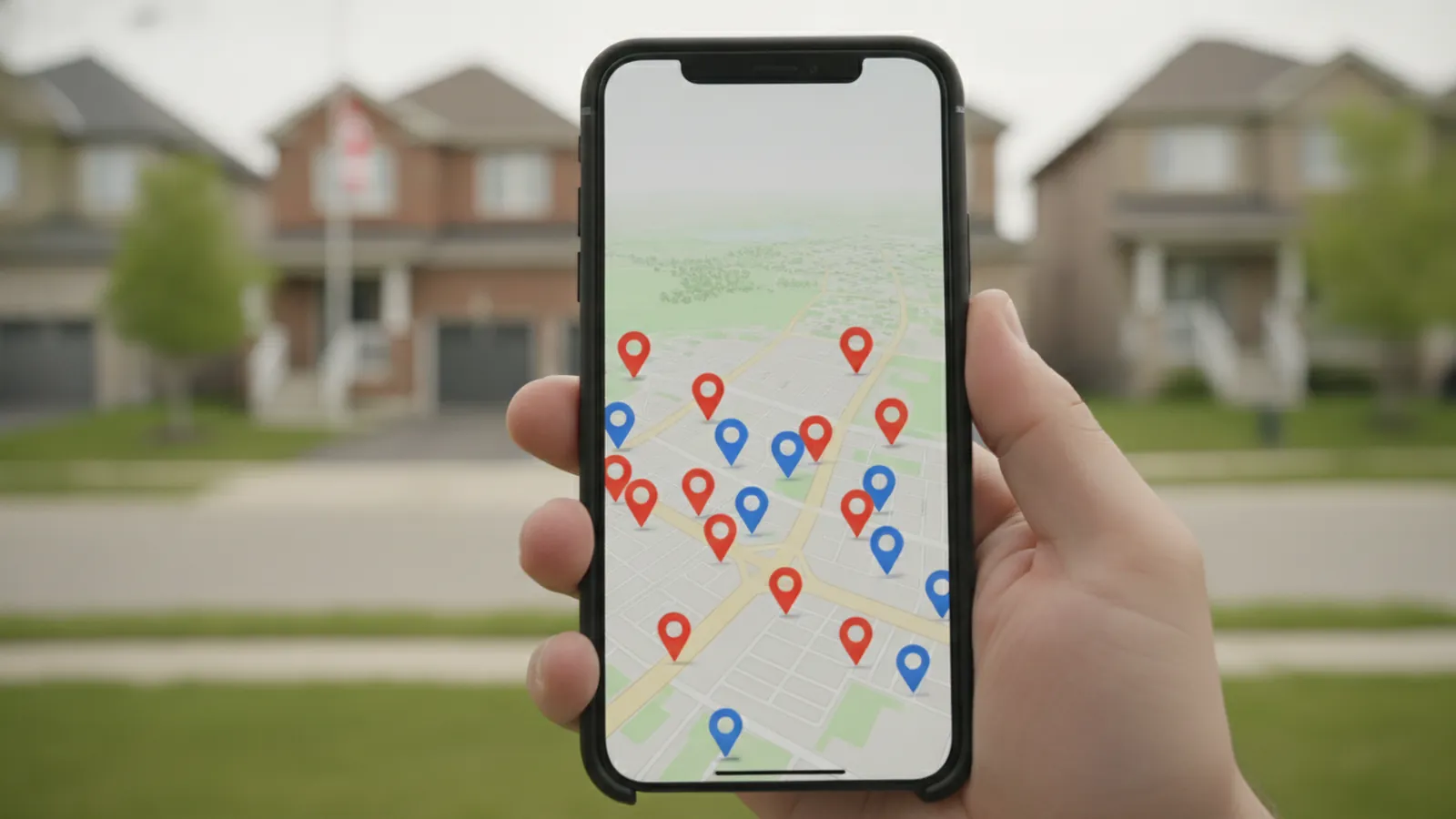
When a homeowner in Etobicoke searches 'electrician near me', Google shows a map with three businesses underneath, then a list of regular results, and often some ads above both. Most of the calls go to the businesses in that map section. Local SEO is the work of earning a place there, and in the regular results below it.
This guide covers what actually moves the needle for contractors in the GTA, in the order we'd tackle it.
How Google decides who shows up locally
Google is unusually open about this. Local results are based mainly on three factors:
- Relevance: how well your business matches what was searched. If someone searches 'heat pump installation', a business that clearly lists heat pump installation is more relevant than one that just says 'HVAC'.
- Distance: how far your business is from the searcher or the location in their search. You can't change where you're based, but you can make your service area clear.
- Prominence: how well known and well regarded your business is, based on things like reviews, links, mentions across the web and your overall search presence.
Everything in local SEO works on one or more of these three.
Step 1: Get your Google Business Profile right
Your Business Profile is the single most important local SEO asset you have. It's what appears in the map results. Make sure it's verified, uses your real business name, has the most specific primary category, lists every service, shows your service areas, and is full of real photos. We walk through every setting in our Google Business Profile guide.
Step 2: Build a page for each service
Google needs to see that you're relevant for each service you want to be found for. A single 'Services' page with a list won't do it. Give each main service its own page that explains what's involved, the problems it solves, rough timelines, what affects the price, and the questions customers ask. Link to these pages from your Business Profile and your homepage.
Step 3: Show your service area honestly
Most contractors are service-area businesses: you go to customers rather than customers coming to you. Make your service area clear on your website and your Business Profile.
If you want pages for specific cities, make each one genuinely useful: jobs you've completed there, local housing considerations (older homes in the Junction, newer subdivisions in Brampton), and reviews from customers in that area. Creating dozens of near-identical pages that only swap the city name is what Google calls doorway pages, which are against its spam policies and can hurt you.
Step 4: Make your business details consistent everywhere
Your business name, phone number, website and address (if you show one) should match exactly across your website, Google, Bing Places, Apple Business Connect, Yelp, YellowPages.ca, the Better Business Bureau, and home-service directories like HomeStars and Houzz. Inconsistent details, such as an old phone number or a former address, create doubt for search engines and AI tools alike.
Step 5: Earn reviews, constantly
Reviews feed directly into prominence, and Google says review count and rating factor into local ranking. They also decide who gets the call once someone sees the map. The key is consistency: ask every customer, right after the job, with a direct link. Our post on Google reviews and AI search covers how to do it within Google's rules.
Step 6: Earn local links and mentions
Links from other reputable local websites tell Google you're a real, established part of the community. For contractors, good sources include:
- Manufacturer and supplier dealer locators, such as an HVAC brand's dealer finder.
- Trade associations and certification programs.
- Your local chamber of commerce or BIA.
- Sponsorships of youth sports teams, charity events and community festivals.
- Local news coverage of a notable project or community involvement.
A handful of genuine local links is worth far more than hundreds of low-quality ones bought online.
Step 7: Cover the technical basics
Your website should load quickly on phones, use HTTPS, have a clear page title and description on every page, and include local business structured data. None of this is glamorous, but problems here can quietly hold everything else back. See technical SEO basics.
What about ads?
Google Ads and Local Services Ads can put you at the top of the page right away, while SEO builds over time. Many contractors use both: ads for immediate leads, SEO for long-term, lower-cost visibility. We compare them in Google Ads vs SEO.
How to track progress
Rankings for a single keyword bounce around and depend on where the searcher is standing, so don't obsess over one number. Watch the trends that matter:
- Calls, website clicks and direction requests in your Business Profile performance report.
- Search impressions and clicks in Google Search Console.
- Calls and form submissions tracked on your website.
- Most importantly, estimates booked and jobs won from local search.
How long does it take?
Fixing your Business Profile and reviews can show results within weeks. Content, service pages and local links typically take several months to build momentum, and competitive trades in dense parts of the GTA take longer. We explain realistic timelines in how long SEO takes.
The bottom line
Local SEO isn't about tricks. It's about giving Google clear proof that you do the job, in the area, and that customers trust you. Get your Business Profile right, build real service pages, keep your details consistent, and earn reviews and local mentions month after month.
Local SEO is part of our Growth and Authority plans. Want to know where you stand right now? Request a free audit and we'll show you what to fix first.